Rapid Tooling
Prototype, RIM, ABS and aluminium moulds for low-volume runs from 1,000 to 10,000 parts.

Rapid tooling produces a working mould in days rather than the weeks a full production tool takes, cutting it from aluminium or simplified steel instead of hardened steel. The tool costs a fraction of production tooling and will run anywhere from a few hundred parts to around ten thousand.
It is the right step once a design has passed prototyping and needs real moulded parts — in the production polymer, out of a real mould — for market testing, pilot runs or certification, before anyone commits to a hardened production tool.
Send a STEP, IGS, STP, IGES or X_T file together with the volume you expect, and we will quote the tool and the per-part cost separately so the trade-off is visible.
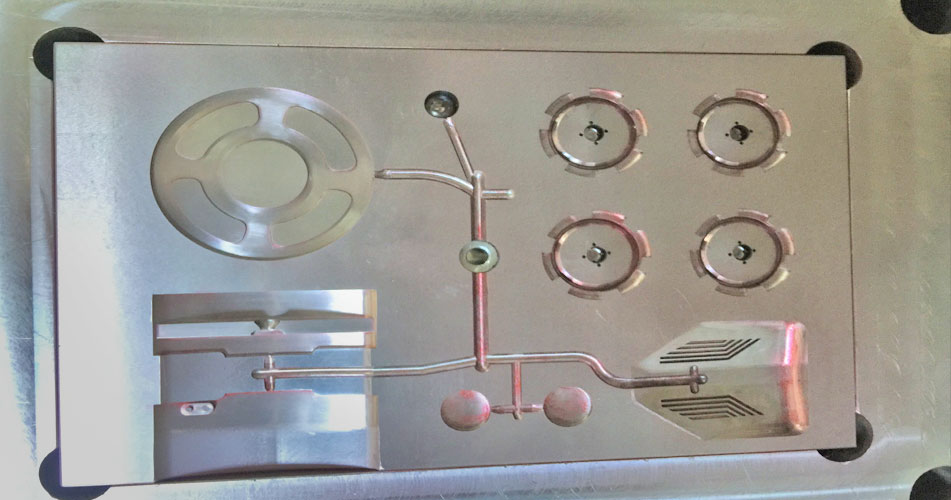
Prototype mold is also called the injection mold.The tool life of prototype mold is shorter than mass production mold, which means the molds will be reduced in some machining process.For example,more than one cavity can share with a universal mold base. Also, we will choose different grades of steel material according to your products quantity, quality and surface finishing requirement. This is the best way for shortening processing time and saving the cost of the tool.
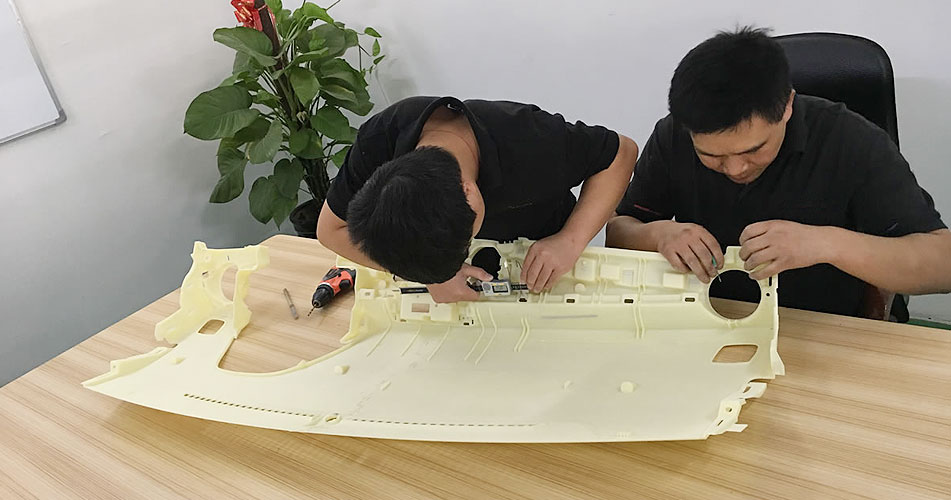
Reaction injection molding and injection molding have almost the same name, so even experienced engineers and designers might think they are same process. But “Reaction” signals a big difference – unlike injection molding, RIM techniques utilize low-viscosity liquid polymers in thermoset – not thermoplastic – processes. Through a variety of chemical reactions, these polymers expand, thicken and harden only after they’re injected into the heated mold, accommodating much more intricate designs than ordinary injection molding. Raw materials and molding techniques can be selected and even customized to precisely deliver desired weight, strength, density and hardness characteristics. The result is large polyurethane parts with much lighter weight than those created by more commonplace processes.
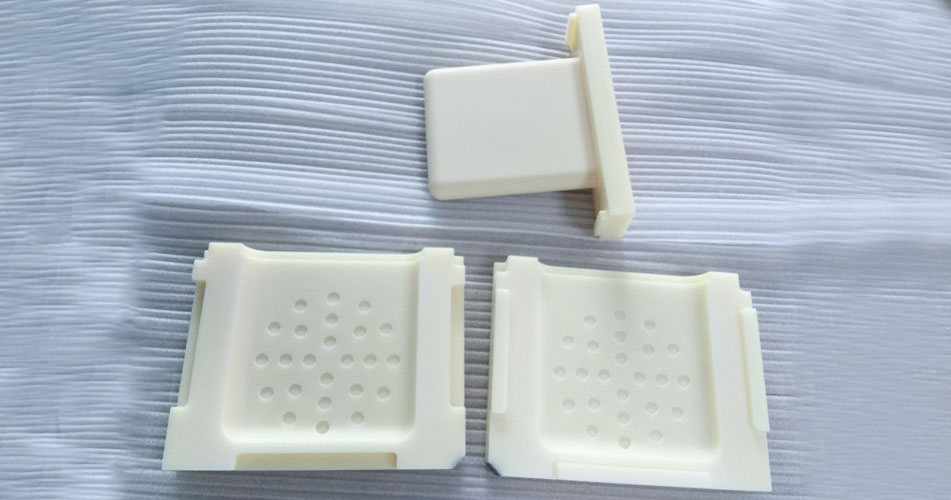
Making an ABS mold by CNC or 3d printing process is usually for low volume silicone rubber parts and over-molding parts.
Making an Aluminium mold by CNC machining is usually used for making low volume interior structural parts from 1K to 2K without surface requirement’s plastic component.

Quotes in less than 24 hours

One prototype or a full production run

Colour and finish to your specification

FAI or OQC report with every batch

Prototyping through to production

7–10 working days, worldwide
No. 83 Zhanjing Road, Zhancheng Community, Fuhai Subdistrict, Bao’an District, Shenzhen, China
Tel: +86 139 2501 1342
E-mail: info@e-make.co / bennett@e-make.co