Vacuum Casting & Urethane Casting
Silicone-mould copies taken from a master pattern, for small batches in days rather than weeks.

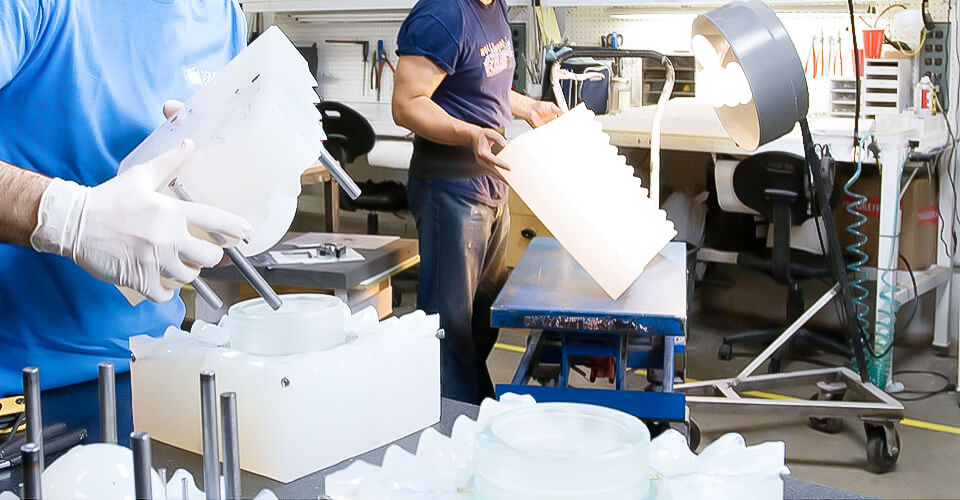
Vacuum casting makes high-quality copies from a master model produced by CNC machining or 3D printing. The master is used to make a silicone mould, and polyurethane is poured into that mould under vacuum to form each copy.
It suits small batches because a silicone mould costs far less than steel tooling and is ready in days. Lead times are shorter than CNC machining or injection moulding, which makes it the usual choice for testing a new product in the market before committing to hard tooling.
Whether you need a hundred parts or a handful every few months, it bridges the gap between prototype and full production. The one limitation is material: vacuum casting produces plastic parts, not metal.
Low-volume production gives you room to change the design, test the market and save cost. Once a tool exists we keep it on hand, so repeat batches come back quickly.
Materials: a range of PU resins including ABS-like, PC-like, PP-like and PE-like. Finishing: polishing, painting, silk-screen and laser engraving, and textures to SPI or MT finish. Colours matched to a sample or Pantone reference, or cast directly into the part.
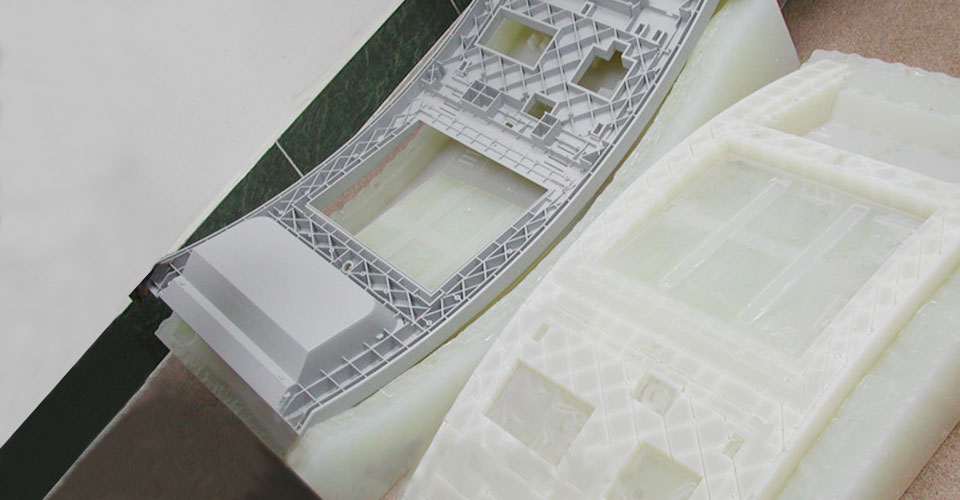


Make a high-quality master model by CNC or 3d printing.


QC inspect the quality of Master Model.


Making of the Silicone Mold by Master Model.


Using the Silicone Mold: After the master models were removed from the silicone mold, we refilled them with Polyurethane (PU) to copy more pieces.

Quotes in less than 24 hours

One prototype or a full production run

Colour and finish to your specification

FAI or OQC report with every batch

Prototyping through to production

7–10 working days, worldwide
No. 83 Zhanjing Road, Zhancheng Community, Fuhai Subdistrict, Bao’an District, Shenzhen, China
Tel: +86 139 2501 1342
E-mail: info@e-make.co / bennett@e-make.co