Rapid Tooling: The Fastest Path from Design to Production-Ready Parts
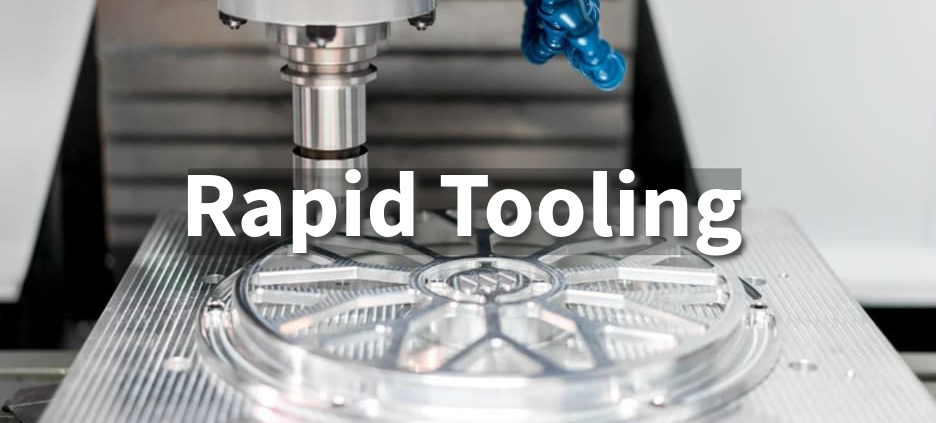
Getting a product to market faster than your competition is no longer just an advantage — it is a necessity. For engineers and product developers who need functional plastic or metal parts quickly, rapid tooling has become the go-to solution. It bridges the gap between a finalized 3D design and a production-ready mold, cutting weeks of lead time down to days.
In this guide, we cover what rapid tooling is, the different types available, when to use it, and how to choose the right manufacturing partner.
What Is Rapid Tooling?
Rapid tooling refers to the process of quickly producing molds, dies, and other production tooling using advanced manufacturing techniques — primarily CNC machining, 3D printing, and EDM (Electrical Discharge Machining). Unlike conventional tooling, which can take 8 to 16 weeks and significant capital investment, rapid tooling can deliver a functional mold in as little as 5 to 15 business days.
The term covers two broad categories:
| Type | Description | Best For |
| Direct Rapid Tooling | The mold is produced directly from CAD data using CNC or additive processes | Short-run production, functional testing |
| Indirect Rapid Tooling | A master pattern is created first, then used to produce the final mold | Complex geometries, silicone or epoxy molds |
Types of Rapid Tooling Explained
Prototype Mold (Soft Tooling)
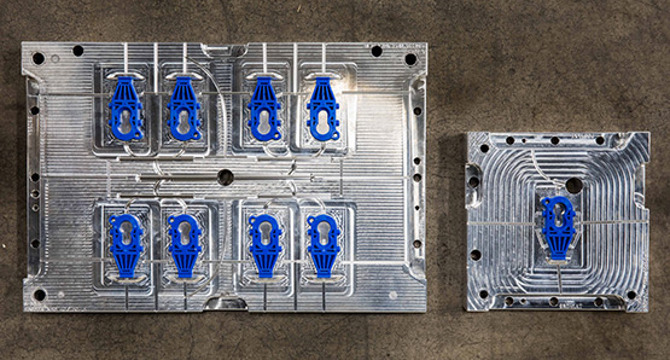
A prototype mold — sometimes called a soft tool — is typically made from aluminum or a lower-grade steel. It is designed for low-volume runs, usually between 1,000 and 10,000 parts. Because the mold does not need to last for millions of cycles, the machining process is faster and the material cost is lower.
This is the most common entry point for companies moving from prototype to pre-production. The mold can share a universal mold base with other cavities, further reducing cost and lead time.
Reaction Injection Molding (RIM)
RIM is a specialized process that uses low-viscosity liquid polymers — typically polyurethane — rather than the thermoplastics used in standard injection molding. The polymers are mixed and injected into a heated mold, where a chemical reaction causes them to expand and harden.
The result is large, lightweight structural parts with excellent design flexibility. RIM is widely used in automotive bumpers, medical equipment housings, and industrial enclosures.
ABS Mold
An ABS mold is produced by CNC machining or 3D printing an ABS plastic mold cavity. It is primarily used for low-volume silicone rubber parts and overmolding applications. The tooling cost is minimal, making it ideal for early-stage product validation.
Aluminum Mold
Aluminum molds offer a step up in durability compared to ABS or epoxy tooling, while still being significantly cheaper and faster to produce than hardened steel molds. They are well-suited for interior structural plastic components in runs of 1,000 to 2,000 parts where surface finish requirements are moderate.
When Should You Use Rapid Tooling?
Rapid tooling is the right choice when:
- You need production-grade parts for testing.CNC-machined prototype molds produce parts with the same material properties as final production runs — something 3D printing cannot always replicate.
- Your volumes are low.For runs between 500 and 10,000 units, investing in a full production steel mold is often not economically justified.
- Your design is still evolving.Aluminum molds are easier and cheaper to modify than hardened steel tools, making them ideal for products that may require design iterations.
- Speed is critical.If you are working toward a trade show deadline, investor demo, or product launch, rapid tooling can compress your timeline significantly.
Rapid Tooling vs. Conventional Tooling: A Direct Comparison
| Factor | Rapid Tooling | Conventional Tooling |
| Lead Time | 5–15 business days | 8–16 weeks |
| Tooling Cost | $1,500–$15,000 | $20,000–$100,000+ |
| Mold Material | Aluminum, ABS, soft steel | Hardened P20, H13 steel |
| Part Volume | 1,000–10,000 units | 100,000–1,000,000+ units |
| Design Changes | Easy and affordable | Expensive and time-consuming |
| Surface Finish | Good (SPI B2–A2) | Excellent (SPI A1) |
The trade-off is clear: rapid tooling sacrifices long-term durability for speed and cost-efficiency. For most product development cycles, that is exactly the right trade-off to make.
Why E-make Precision Is Your Trusted Partner for Rapid Tooling
Choosing the right rapid tooling partner matters as much as choosing the right process. At E-make Precision, our team brings over 30 years of combined experience in prototype and low-volume manufacturing, working with product engineers, industrial designers, and OEM procurement teams across North America, Europe, and Asia.
Here is what sets our rapid tooling service apart:
- Comprehensive Tooling Options:We offer prototype molds, RIM tooling, ABS molds, and aluminum molds — all under one roof. You get a single point of contact from DFM review to final shipment.
- Tight Tolerances:Our CNC machining centers hold tolerances as tight as ±0.01 mm, ensuring your mold cavities meet dimensional requirements on the first shot.
- Fast Quoting:Submit your STEP or IGES file and receive a detailed quote in under 8 hours. No waiting days for a callback.
- End-to-End Surface Finishing:From polishing and anodizing to painting and silk-screening, we handle post-processing so your parts arrive ready to use.
- Transparent Communication:Our team responds in English within hours, with 24-hour communication coverage to keep your project moving.
Whether you need 500 polyurethane enclosures for a medical device trial or 5,000 aluminum-mold plastic brackets for an automotive interior, E-make Precision has the tooling capability and manufacturing flexibility to deliver.
How to Get Started
Getting a rapid tooling quote from E-make Precision is straightforward:
- Prepare your CAD filein STEP, IGES, STP, or X_T format.
- Email your files to bennett@e-make.co with your quantity, material, and surface finish requirements.
- Receive your quotewithin 8 hours, including DFM feedback if any issues are identified.
- Approve and produce.Once you confirm the order, tooling fabrication begins immediately.
Conclusion
Rapid tooling is one of the most effective ways to accelerate product development without compromising part quality. Whether you are validating a new design, running a market pilot, or bridging the gap before full production tooling is ready, the right rapid tooling process — and the right partner — can make the difference between hitting your launch date and missing it.
Ready to move your project forward? Contact E-make Precision today. Upload your CAD file and get a free quote in under 8 hours.
E-make Precision | Shenzhen, China | bennett@e-make.co | https://e-make.co