CNC Machining for AI Hardware: Precision Manufacturing for the Next Generation of Computing

Artificial intelligence is advancing at an unprecedented pace, driven by breakthroughs in neural networks and massive datasets. However, behind every software innovation lies a critical and often overlooked layer of physical infrastructure. AI hardware—from high-density server racks to edge computing devices—requires mechanical components that can withstand extreme thermal loads and meet strict dimensional tolerances.


For engineers and hardware developers, CNC machining has become the foundational manufacturing process for AI infrastructure. Whether you are developing liquid cooling manifolds for data centers or compact enclosures for AI-driven robotics, precision CNC machining provides the accuracy, scalability, and material versatility required to bring these advanced systems to life.


Why AI Hardware Demands Precision CNC Machining

Unlike standard consumer electronics, AI hardware operates under extreme conditions. Training large language models (LLMs) or processing real-time computer vision data requires massive computational power, which in turn generates significant heat and mechanical stress.
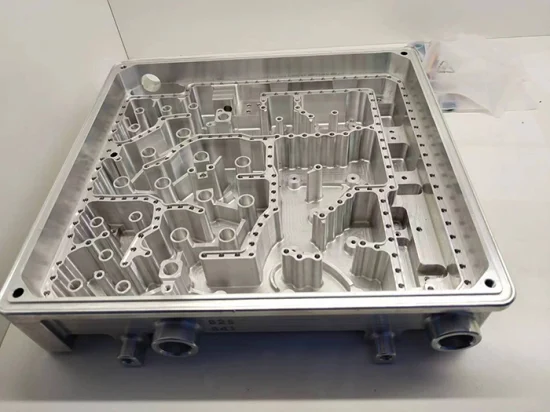
CNC machining is essential for AI hardware manufacturing for three primary reasons:


  1. Extreme Thermal Management

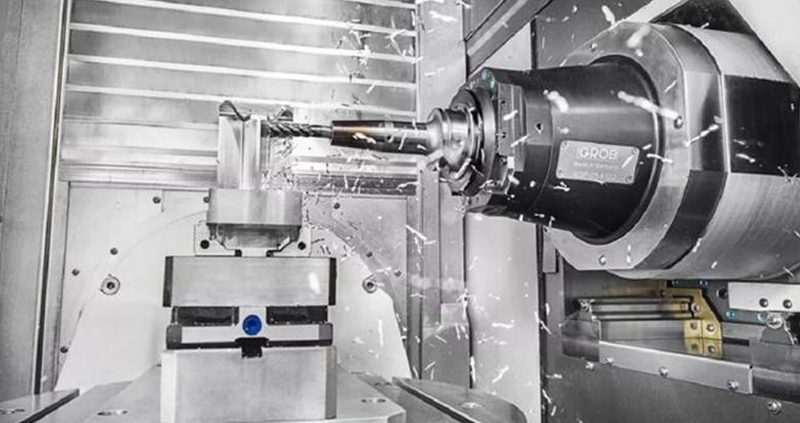
AI workloads push GPUs and custom ASICs to their thermal limits. Effective heat dissipation is non-negotiable to prevent throttling and hardware failure. CNC machining is the preferred method for manufacturing complex heat sinks, cold plates, and liquid cooling distribution manifolds. Multi-axis CNC mills can cut intricate fin geometries and internal fluid channels into high-thermal-conductivity materials like copper and aluminum, maximizing the surface area for heat transfer.


  1. Micron-Level Tolerances

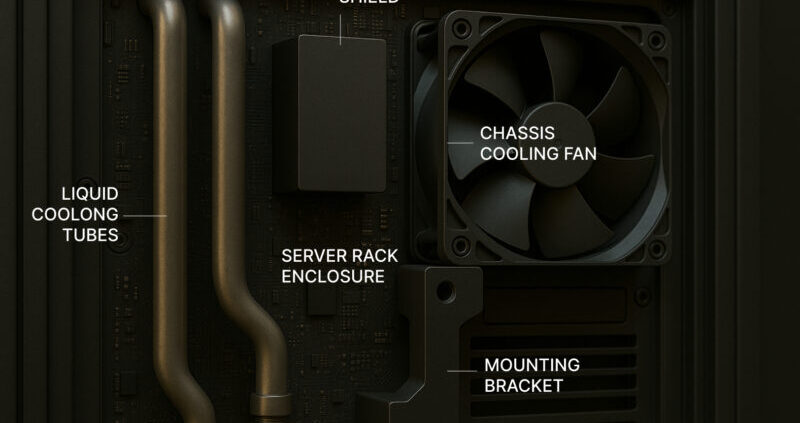
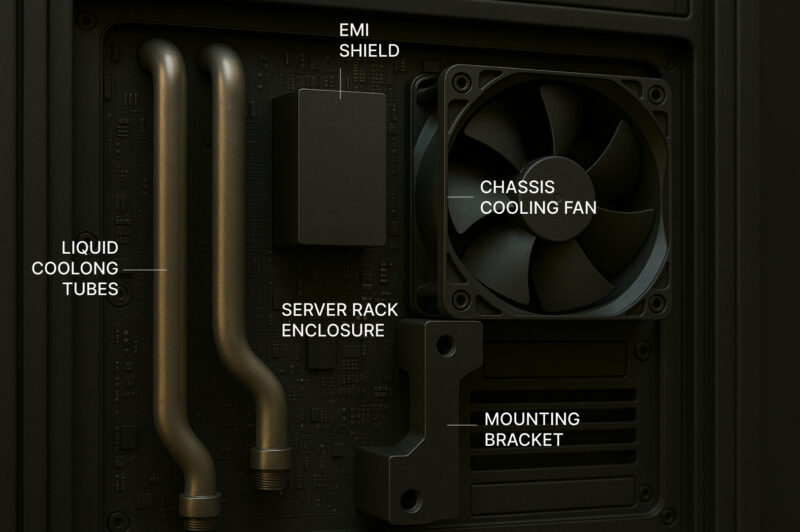
In high-density AI server racks, spatial efficiency is critical. Components such as processor housings, mounting brackets, and EMI (Electromagnetic Interference) shields must fit together perfectly. CNC machining routinely achieves tolerances as tight as ±0.01 mm, ensuring that delicate electronic components are securely aligned and protected from vibration and environmental factors.


  1. Rapid Prototyping to Low-Volume Production

The AI hardware sector is evolving rapidly. Hardware startups and enterprise data centers frequently iterate on designs to accommodate new chip architectures. CNC machining allows for rapid transition from an initial AI hardware prototype to low-volume manufacturing (1,000 to 10,000 units) without the long lead times and high upfront costs associated with injection molding or die casting.


Key CNC Machined Components in AI Infrastructure

The physical backbone of artificial intelligence relies on a variety of precision-machined parts.
AI Server and Data Center Hardware

Data centers optimized for AI require robust structural and thermal components:

  • Liquid Cooling Cold Plates:Direct-to-chip cooling plates machined from copper or aluminum to extract heat directly from high-performance GPUs.
  • Server Chassis and Racks:High-strength aluminum and stainless steel frames that provide structural integrity for heavy, densely packed server units.
  • Fluid Distribution Manifolds:Precision-machined manifolds that route coolant safely through the server rack without risk of leakage.


Edge AI and Smart Devices

For AI applications deployed outside the data center—such as autonomous vehicles, industrial robotics, and smart cameras—the requirements shift toward durability and weight reduction:

  • AI Device Enclosures:Ruggedized, weather-resistant aluminum housings that protect sensitive edge computing boards from harsh environments.
  • Sensor and Lidar Brackets:Lightweight, dimensionally stable mounts that ensure optical and spatial sensors remain perfectly calibrated.


Material Selection for AI Hardware Machining

Choosing the right material is critical for balancing thermal performance, weight, and structural integrity in AI devices.


Material Key Properties Common AI Hardware Applications
Aluminum (6061, 7075) Lightweight, excellent machinability, good thermal conductivity, highly corrosion-resistant when anodized. Server chassis, AI device enclosures, standard heat sinks, sensor brackets.
Copper (C101, C110) Superior thermal and electrical conductivity, higher density and cost than aluminum. High-performance GPU cold plates, advanced liquid cooling modules, electrical contacts.
Stainless Steel (304, 316) High tensile strength, excellent corrosion resistance, durable under mechanical stress. Structural rack components, heavy-duty mounting fixtures, EMI shielding.
Engineering Plastics (PEEK, POM) Electrical insulation, low weight, chemical resistance. Internal insulating brackets, non-conductive spacers, lightweight drone components.


Why E-make Precision is Your Partner for AI Hardware Manufacturing

When developing infrastructure for artificial intelligence, you need a manufacturing partner who understands the demands of high-performance computing. E-make Precision is uniquely equipped to support the rapid development and production of AI hardware.
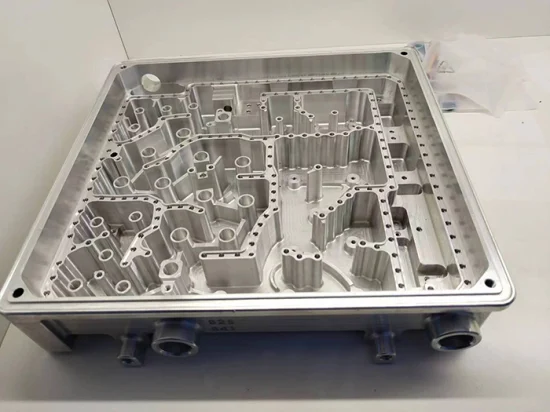
 

With over 30 years of combined experience in prototype and low-volume manufacturing, we offer the capabilities necessary to bring your AI hardware to market faster:


  • Uncompromising Precision:Our state-of-the-art 3-axis and 5-axis CNC machining centers hold tolerances down to ±0.01 mm, ensuring your heat sinks and enclosures meet strict ISO 2768-m/-f standards.
  • Advanced Thermal Solutions:We specialize in machining complex copper and aluminum cooling components, from prototype cold plates to low-volume production runs of server manifolds.
  • Rapid Turnaround:In the fast-paced AI industry, speed is critical. We provide detailed quotes in under 8 hours and deliver CNC machined parts in just 1 to 3 days.
  • Scalable Manufacturing:Whether you need 5 prototypes for thermal testing or 5,000 enclosures for a product rollout, our flexible production lines scale to meet your exact volume requirements.
  • Comprehensive Finishing:We offer complete surface finishing services, including anodizing, powder coating, and electroless plating, ensuring your parts are protected and aesthetically refined.


Accelerate Your AI Hardware Development

The hardware that powers artificial intelligence cannot be compromised by subpar manufacturing. From intricate thermal management systems to rugged edge computing enclosures, precision CNC machining is the clear choice for quality and performance.


Ready to build the future of computing?


Contact E-make Precision today to discuss your AI hardware project. Submit your STEP or IGES files to bennett@e-make.co and receive a comprehensive quote within 8 hours.


Visit https://e-make.co to learn more about our advanced CNC machining and rapid prototyping capabilities.


E-make Precision | Shenzhen, China | bennett@e-make.co | https://e-make.co
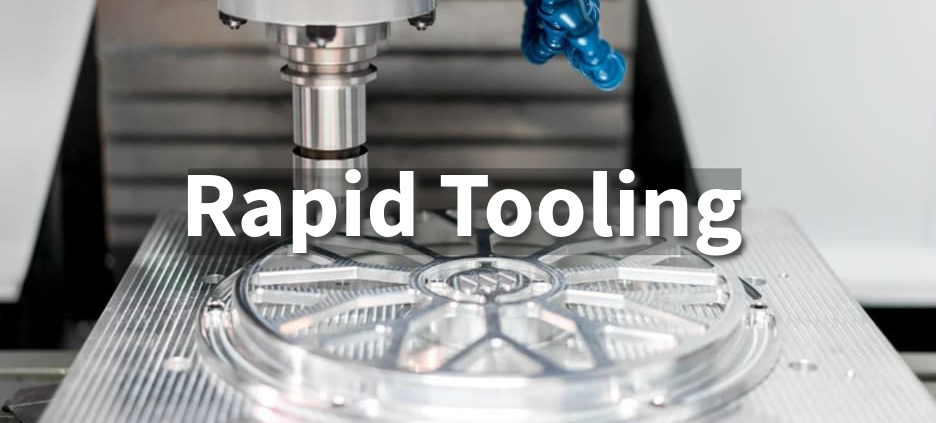
Rapid Tooling: The Fastest Path from Design to Production-Ready Parts

Getting a product to market faster than your competition is no longer just an advantage — it is a necessity. For engineers and product developers who need functional plastic or metal parts quickly, rapid tooling has become the go-to solution. It bridges the gap between a finalized 3D design and a production-ready mold, cutting weeks of lead time down to days.


In this guide, we cover what rapid tooling is, the different types available, when to use it, and how to choose the right manufacturing partner.


What Is Rapid Tooling?

Rapid tooling refers to the process of quickly producing molds, dies, and other production tooling using advanced manufacturing techniques — primarily CNC machining, 3D printing, and EDM (Electrical Discharge Machining). Unlike conventional tooling, which can take 8 to 16 weeks and significant capital investment, rapid tooling can deliver a functional mold in as little as 5 to 15 business days.


The term covers two broad categories:


Type Description Best For
Direct Rapid Tooling The mold is produced directly from CAD data using CNC or additive processes Short-run production, functional testing
Indirect Rapid Tooling A master pattern is created first, then used to produce the final mold Complex geometries, silicone or epoxy molds


Types of Rapid Tooling Explained

Prototype Mold (Soft Tooling)

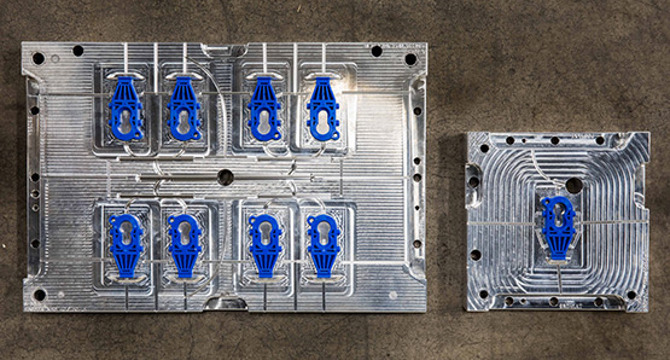
A prototype mold — sometimes called a soft tool — is typically made from aluminum or a lower-grade steel. It is designed for low-volume runs, usually between 1,000 and 10,000 parts. Because the mold does not need to last for millions of cycles, the machining process is faster and the material cost is lower.


This is the most common entry point for companies moving from prototype to pre-production. The mold can share a universal mold base with other cavities, further reducing cost and lead time.


Reaction Injection Molding (RIM)

RIM is a specialized process that uses low-viscosity liquid polymers — typically polyurethane — rather than the thermoplastics used in standard injection molding. The polymers are mixed and injected into a heated mold, where a chemical reaction causes them to expand and harden.


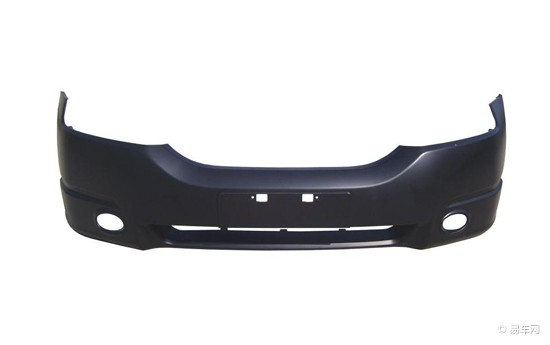
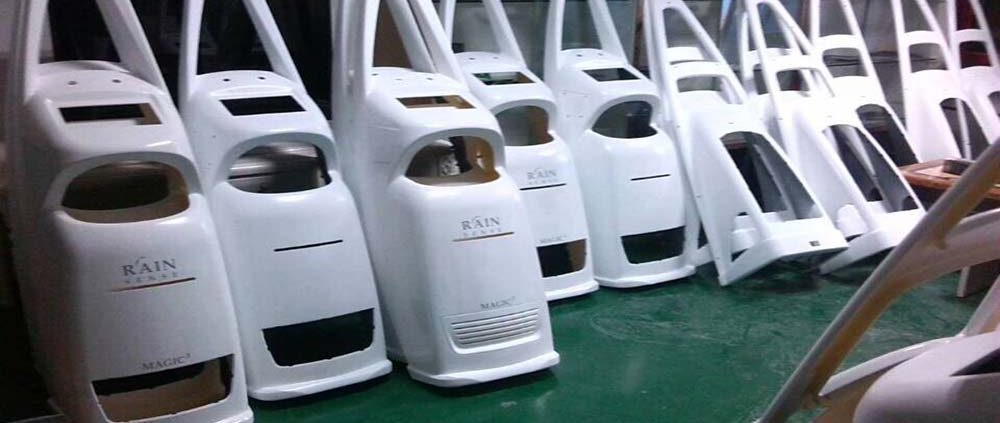
The result is large, lightweight structural parts with excellent design flexibility. RIM is widely used in automotive bumpers, medical equipment housings, and industrial enclosures.


ABS Mold

An ABS mold is produced by CNC machining or 3D printing an ABS plastic mold cavity. It is primarily used for low-volume silicone rubber parts and overmolding applications. The tooling cost is minimal, making it ideal for early-stage product validation.


Aluminum Mold

Aluminum molds offer a step up in durability compared to ABS or epoxy tooling, while still being significantly cheaper and faster to produce than hardened steel molds. They are well-suited for interior structural plastic components in runs of 1,000 to 2,000 parts where surface finish requirements are moderate.


When Should You Use Rapid Tooling?

Rapid tooling is the right choice when:


  • You need production-grade parts for testing.CNC-machined prototype molds produce parts with the same material properties as final production runs — something 3D printing cannot always replicate.
  • Your volumes are low.For runs between 500 and 10,000 units, investing in a full production steel mold is often not economically justified.
  • Your design is still evolving.Aluminum molds are easier and cheaper to modify than hardened steel tools, making them ideal for products that may require design iterations.
  • Speed is critical.If you are working toward a trade show deadline, investor demo, or product launch, rapid tooling can compress your timeline significantly.


Rapid Tooling vs. Conventional Tooling: A Direct Comparison

Factor Rapid Tooling Conventional Tooling
Lead Time 5–15 business days 8–16 weeks
Tooling Cost $1,500–$15,000 $20,000–$100,000+
Mold Material Aluminum, ABS, soft steel Hardened P20, H13 steel
Part Volume 1,000–10,000 units 100,000–1,000,000+ units
Design Changes Easy and affordable Expensive and time-consuming
Surface Finish Good (SPI B2–A2) Excellent (SPI A1)

The trade-off is clear: rapid tooling sacrifices long-term durability for speed and cost-efficiency. For most product development cycles, that is exactly the right trade-off to make.


Why E-make Precision Is Your Trusted Partner for Rapid Tooling

Choosing the right rapid tooling partner matters as much as choosing the right process. At E-make Precision, our team brings over 30 years of combined experience in prototype and low-volume manufacturing, working with product engineers, industrial designers, and OEM procurement teams across North America, Europe, and Asia.


Here is what sets our rapid tooling service apart:


  • Comprehensive Tooling Options:We offer prototype molds, RIM tooling, ABS molds, and aluminum molds — all under one roof. You get a single point of contact from DFM review to final shipment.
  • Tight Tolerances:Our CNC machining centers hold tolerances as tight as ±0.01 mm, ensuring your mold cavities meet dimensional requirements on the first shot.
  • Fast Quoting:Submit your STEP or IGES file and receive a detailed quote in under 8 hours. No waiting days for a callback.
  • End-to-End Surface Finishing:From polishing and anodizing to painting and silk-screening, we handle post-processing so your parts arrive ready to use.
  • Transparent Communication:Our team responds in English within hours, with 24-hour communication coverage to keep your project moving.


Whether you need 500 polyurethane enclosures for a medical device trial or 5,000 aluminum-mold plastic brackets for an automotive interior, E-make Precision has the tooling capability and manufacturing flexibility to deliver.


How to Get Started

Getting a rapid tooling quote from E-make Precision is straightforward:


  • Prepare your CAD filein STEP, IGES, STP, or X_T format.
  • Email your files to bennett@e-make.co with your quantity, material, and surface finish requirements.
  • Receive your quotewithin 8 hours, including DFM feedback if any issues are identified.
  • Approve and produce.Once you confirm the order, tooling fabrication begins immediately.


Conclusion

Rapid tooling is one of the most effective ways to accelerate product development without compromising part quality. Whether you are validating a new design, running a market pilot, or bridging the gap before full production tooling is ready, the right rapid tooling process — and the right partner — can make the difference between hitting your launch date and missing it.


Ready to move your project forward? Contact E-make Precision today. Upload your CAD file and get a free quote in under 8 hours.


E-make Precision | Shenzhen, China | bennett@e-make.co | https://e-make.co
Rapid prototyping service

Rapid prototyping

In the design procedure of R&D items, after they have finished the style drawings, among things they wish to do most is to recognize what the products they create are like actually, and whether the appearance of the products follows their very own design ideas., Is the structure style of the item reasonable, and so on? Prototype production is created in feedback to this need.

Category of models:

Models can be split right into guidebook and mathematical control prototypes according to the manufacturing approaches:

Hands-on model: The major work is done by hand.

CNC model: The primary work is finished by CNC maker tools, and also depending upon the equipment utilized, it can be split right into laser fast prototyping (RP, Quick Prototyping) prototypes and also machining center (CNC) models

A: RP model: generally produced by laser quick prototyping technology.

B: CNC prototype: mainly produced by machining facility.

RP prototypes have their own advantages compared to CNC prototypes: the advantages of RP prototypes are mostly in its rapidity, but it is generally formed by stacking modern technology, so RP prototypes are generally fairly harsh, and there are particular demands for the wall surface density of the item, for instance, If the wall surface density is as well thin, it can not be created.

The benefit of CNC model is that it can accurately show the details expressed in the drawings, as well as the surface high quality of CNC prototype is high, particularly after the surface area spraying and silk printing are finished, it is a lot more glamorous than the product generated after the mold is opened. As a result, CNC model production has progressively become the mainstream of model manufacturing.


According to the products made use of in production, models can be split into plastic and metal models:

( 1) Plastic prototypes: The raw products are plastic, primarily for models of plastic products, such as tvs, monitors, telephones, and more.

( 2) Steel models: The raw products are aluminum-magnesium alloys as well as other metal products, mostly for high-end products, such as laptop, high-end solitary gamers, MP3 players, CD players, and more.


The necessity of prototype production

( 1 )Design assessment

The model is not just noticeable, however likewise touchable. It can straight mirror the developer’s creative thinking in the form of physical objects, preventing the drawback of “drawing to look excellent however not to make it look good”. Therefore, prototype production is vital in the process of brand-new item growth and also item form analysis.

( 2 )Inspect the architectural style

Due to the fact that the model is assembleable, it can without effort show the reasonableness of the framework and the ease of setup. It is convenient to find and also resolve troubles early.

( 3 )Aviod the threat of straight make mold and mildews

Because the cost of mold and mildew manufacturing is normally very high, reasonably big molds deserve hundreds of thousands and even millions. If unreasonable framework or various other troubles are discovered in the process of opening the mold and mildew, the loss can be imagined. Model production can avoid this loss and also lower the risk of mold and mildew opening.

The surface of model:1, electroplate.2, anodized.3, painting.4, gloss.5, lase.etc.

If you have a brand-new item that require to make a prototype to create assessment as well as inspect the structural design.Please do not be reluctant to call us.As a model manufacturing facility for 20 years.We can make any product.

Website:https://e-make.co/

Email:info@e-make.co

CNC Machining Metal Parts

Aluminum CNC Machining

Aluminum CNC machining service

Everything before this topic is prep work. CNC Machining is where the rubber meets the road. All the steps of CNC before machining are just getting ready for the machining phase of the task. A simple meaning of machining is removing material. You remove material in numerous methods to come up with the part or item.

CNC Machining can be done on countless sorts of product. As an example, plastic, steel, aluminum. Machining generally has actually greater resistances associated with it. When machining, you are trying to do something extra specific.

In machining, we use some sort of tool. This tool could be a mill, drill little bit, end mill, router little bit or various other device. There are boundless variations of devices. CNC Tooling usually costs a fair amount of cash. As soon as you invest in your tooling though, you can use it repeatedly until it breaks. If you have a large range of different devices, you will certainly be able to perform a large selection of machining kinds.

A list of usual tooling used in CNC Machines:
Drill bits
End mills
Plasma cutter
Dovetail cutter
Fly cutter

If you wish to look at various sorts of CNC tooling, most likely to one of these resources on the Internet:
Enco
Travers
McMasters-Carr
Grainger

Skim a few of these distributors’ magazines as well as you will certainly obtain a concept concerning the unlimited styles of tooling.

CNC is utilized in the machining procedure. Generally, you can get better accuracy, quicker manufacturing, and also general performances when making use of CNC machining. This is why it has actually become so preferred. In the past, CNC machining was extremely costly. With time, it has actually come to be somewhat low-cost and also currently people do it as a pastime. I am thinking that is why you are right here.
Right here are a few different sorts of CNC devices that do various machining procedures:
Milling devices
Wood routers
Plasma cutters
Foam cutters
Press brakes
Lathes
Cutoff saws

Individuals have effectively applied CNC to virtually any sort of motion control. The only thing that will limit you is your creative imagination.

The E-make team has greater than three decades of consolidated experience in prototype machining, CNC machining.And has a high-level technical team of 25 peoples.The processing top quality of the fast production is stable, the handling accuracy is high, and the look is exquisite.If you require any type of assistance, please do not hesitate to contact us.

CNC turning machining Service

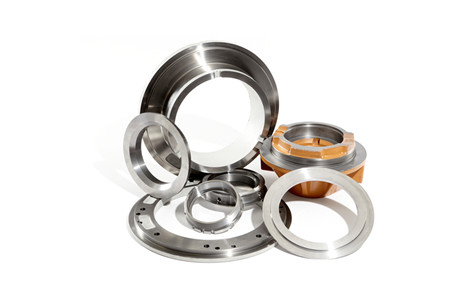
CNC turning is one of the most basic and most commonly used cutting processing methods.For most work pieces with revolving surfaces,it can be processed by CNC turning machine,such as inner and outer cylindrical surfaces,inner and outer tapered surfaces,end surfaces, grooves,threads,and rotary forming surfaces, etc. .
With the development of modern technology,there are more and more high-strength and high-hardness engineering materials.Traditional CNC turning machine has been unable to meet or realize the processing requirements of certain high-strength and high-hardness materials, while modern hard cnc turning technology can Make it possible and obtain significant benefits in production.The following is a brief introduction to the characteristics of CNC turning machining:
(1)CNC turning machining efficiency is high:
CNC turning uses large cutting depth and high work piece speed,and its removal rate is usually several times that of CNC grinding.CNC lathes can complete various surface machining in one clamping process,while grinding requires multiple installations,so the auxiliary time of CNC turning machining is shorter,and the position accuracy of each processing surface will be higher.
(2)The cost of equipment investment is low.Under the same productivity, the investment of a lathe machine is obviously better than that of a grinder,and the cost of its auxiliary system is also low.In the production of small batches of parts, CNC turning does not require special equipment, and the processing of large quantities of high-precision parts requires high rigidity, positioning accuracy, and repeat positioning accuracy for CNC machine tools.
(3)The lathe suitable for small batch flexible production is a flexible processing method with a wide range of processing.The lathe is easy to operate and the turning fixture is fast.Compared with grinding,hard turning is more suitable for the requirements of flexible production.
(4)Hard CNC turning can obtain better overall machining accuracy.
(5)CNC turning machining surface quality is excellent,processing roundness is accurate,and can ensure high position accuracy on the processing surface,Also will not produce burns and cracks during the cutting process,and most of the heat generated during the processing of the parts will be taken away by the cutting oil.
From the perspective of processing technology and programming, five-axis CNC machine tools have the following advantages in the processing of complex inclined surfaces:
1.Improve processing quality and improve efficiency.
2.Expand the processing technology category.
3.To achieve a new direction of compound development trend.
The E-make team has more than 30 years of combined experience in prototype machining,CNC manufacturing.And has a high-level technological group of 25 peoples.The processing quality of the rapid manufacturing is stable,the processing precision is high,and the appearance is exquisite.If you need any help,please feel free to contact us.

Car rear light prototype manufacturing

Car rear light prototype manufacturing

Name:car rear light prototype


Color:can custom any color according customer requirements.


Material:PC,TransparentPMMA,ABS,POM


Size:The dimensions of 3D drawings provided by customers shall prevail

Time:8days


Types:prototype of auto parts


Characteristics of prototype:


1,Clear lines,relying on imported equipment and unique process design, precision machining makes the line stripe path and outline more clear and smooth.


2,High efficient,strong strength.The company focuses on prototype processing for 12 years,we have accumulated a lot of relevant experience and talents,can efficiently meet customer requirements ,Meet customer requirements under the premise of faster order completion.


3,Higher precision, imported equipment, precision tolerance ±0.05mm.


4,Fast efficiency and short processing time.


Excellent talents, a wider range of processing size.

Advantage:

 1,High quality and reasonable price

 2,Machining, drawing or sample.

3,Can according 3D drawings and 2d drawings。

4,3D drawing file format :IGS/X-T/PRT/STP /STL is all available.

5,Custom samples and technical specifications are welcome。

Automobile rear light hand plate model can be carried out:

1,CNC machining

2,polishing

3,painting

4, electroplating

5,assemble

E-make prototype advantages and strength characteristics:

1,Quote in 1 hour, delivery in 2 working days.

2,Our company has SLS and DLP from Germany, SLA rapid prototyping equipment from America, Stratasys 3D printer from America, metal powder 3D printer from America, and ProJet860 full-color 3D printing equipment from America. Taiwan imported CNC machining center 10 sets, vacuum casting, low pressure perfusion.

3,Prototype appearance can be spray paint, electroplating, wire drawing, screen printing.

4,We can make 3D printing prototype, plastic prototype, hardware prototypr, function prototype, appearance prototype, transparent prototype, high temperature resistant prototype, coffee machine prototype, kitchen appliance hand board, auto parts hand board and so on.

5,Packing: inner packaging: pearl cotton, transparent bag. Outer package: carton.


If you need do auto parts prototype,please feel free to contact us .


https://e-make.co/

E-mail:amy@e-make.co

CNC Machining Metal Parts

Precision 5 Aixs CNC Machining

Precision 5 Aixs CNC Machining
With the growing maturity of domestic numerical control technology,recently five CNC machining center has been more and more widely used in various fields.Precision 5 axis cnc machining is the important way to solve the problem when we need to make the mechanical product with complex structure and require high quality and high tolerance.For example,the aerospace,military industries,the car product and the mould parts will need the 5 aixs machine to meet the high efficiency, high quality processing.
About 5 axis machining,there are also a problem regarding True and false five-axis machine.The biggest difference between them is the RTCP functionality.
RTCP,we also call it as Rotated Tool Center Point,which is a tool point following function.In five-axis machining, when the tool nose point trajectory and the posture between the tool and the workpiece are pursued, additional movement of the tool nose point occurs due to the rotary motion. The control point of the numerical control system often does not coincide with the tool tip point, so the numerical control system must automatically correct the control point to ensure that the tool tip point moves according to the established trajectory of the command.This technology is also known as TCPM,TCPC,or RPCP functionality.
In the production machining,three axis processing equipment is more common used.There are vertical, horizontal and gantry and other forms.Common processing methods are end milling cutter edge processing, edge processing.Ball head knife copying processing and so on.However,both of 3 axis machine and 5 axis machine have a common feature,that is,in the process of machining,the direction of the knife axis always remains the same.
Compare to the 3 axis machine,the advantage of 5 axis CNC machine is as below.
1.It can maintain the best cutting state of the tool and improve the cutting conditions.
2.It can effectively avoid tool interference.
3.It can reduce the clamping times because one clamping can complete the processing of five sides.
4.It can Improve processing quality and efficiency.
5.It can shorten the production process chain and simplify production management
The more complex of the mechanical parts, the greater its advantage over traditional decentralized production methods.But the disadvantage of the 5 axis machined is the tool control,the numerical control system,the CAM programming and post-processing are much more complex than 3 axis.
Machining the workpieces by 3 axis machine or 5 aixs machine,which one is better is depends on how complex the shape of the product is,and how much precision the product requires.If just for making a parts with simple shape,of course 3 axis machine is a better choice,and more cost-effective.

our cases mock up 2

Injection molding service

Injection molding is a method of producing shapes for industrial products.Products usually use rubber injection molding and plastic injection molding.Injection molding can also be divided into injection molding molding method and die-casting method.Injection molding machine (abbreviated as injection machine or injection molding machine) is the main molding equipment that uses plastic molding molds to make various shapes of plastic products from thermoplastics or thermosets. Injection molding is achieved through injection molding machines and molds.Plastic injection molding is a method of plastic products.The molten plastic is injected into the plastic product mold by pressure,and then cooled and molded to obtain various plastic parts.There are mechanical injection molding machines dedicated to injection molding. The most commonly used plastics are polyethylene,ABS,PA, PC,polystyrene, etc.
As we all know,PC is commonly known as polycarbonate and has very good mechanical properties,so it is commonly known as bulletproof glue. And PC material has the characteristics of high mechanical strength,wide use temperature range,good electrical insulation performance,good dimensional stability,and transparency.Therefore,the use of PC materials can be used in many occasions. For example,it is widely used in electrical products,electrical instrument housings,and electronic product structural parts.On the other hand,there are many modified PC products,usually adding glass fiber,mineral fillers,chemical flame retardants,and other plastics.Another point is that PC materials have poor fluidity and higher processing temperatures,so the processing of modified materials requires a special plasticized injection structure.This is one of the characteristics of the PC.And Regardless of its mechanical properties,or temperature range are very superior.PC also has the characteristics of good insulation and dimensional stability.It can be used in many situations.Of course,the fire performance of PC is also good.
But Whether the design of the injection mold is reasonable will directly affect the quality of plastic products.The main factors affecting plastic shrinkage include thermal shrinkage,phase change shrinkage, orientation shrinkage,compression shrinkage and elastic recovery.
These influencing factors are related to the molding conditions or operating conditions of precision injection molded products.Therefore, mold designers must have rich design and injection molding experience, and must consider the relationship between these influencing factors and injection conditions and their apparent factors,such as injection pressure and cavity pressure and filling speed,injection melt temperature and mold temperature ,Mold structure and gate form and distribution, as well as the influence of factors such as gate cross-sectional area,product wall thickness,reinforcing filler content in plastic materials and orientation of plastic materials.
The E-make company has 30 years of experience in custom-made production of injection molding.The plastic injection molding products will be exquisite in appearance,reliable in quality and delivered on time.If you want to customize the high-precision injection molding products.All information from customers was kept secret,we can sign NDA with you before starting any work.If you need any help,please feel free to contact us.